
Worker Exposure to Silica during Countertop Manufacturing, Finishing, and Installation
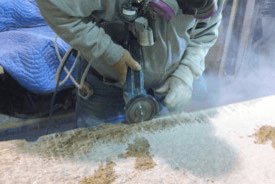 Crystalline silica occurs in nature mostly as the minerals quartz, cristobalite, and tridymite, and is found in granite, sandstone, quartzite, various other rocks, and sand. Workers who inhale very small dust particles containing respirable crystalline silica (RCS) are at risk for silicosis — an incurable, progressively disabling,
and potentially fatal lung disease.
RCS is very small particles — typically 100 times smaller than ordinary sand — that can become trapped in lung tissue, causing inflammation and scarring and reducing the lungs’ ability to take in oxygen. Symptoms of silicosis include shortness of breath, cough, and fatigue, and the timeline of developing silicosis symptoms depends on duration and intensity of RCS exposure. Exposure to RCS also puts workers at increased risk for lung cancer, chronic obstructive pulmonary disease (COPD), tuberculosis, and kidney disease, and is associated with development of autoimmune disorders and
cardiovascular damage.
OSHA and NIOSH investigated U.S. worker exposure to RCS and the effectiveness of exposure control measures in the stone countertop industry following reports of engineered stone countertop workers in the United States and around the world developing silicosis.1-9 In some cases, workers were operating with inadequate or no dust suppression; respiratory protection was also inadequate or not being used at all.1,3,10,11 While the stone industry has worked to implement dust controls to protect workers,12 studies and OSHA inspections indicate that exposure levels are not adequately controlled in some U.S. stone countertop manufacturing and fabrication worksites.8,13 Employers can utilize the recommendations listed in this document to adequately control exposure levels.